







Do memory games prevent dementia? It is one of the most searched brain health questions there is, usually asked with a crossword in one hand and a worry in the other. The honest answer is more interesting than a yes or a no, and more hopeful than most people expect, because the things that genuinely help are things almost anyone can do.
Quick Answer
Memory games alone have not been proven to prevent dementia. Research suggests certain kinds of cognitive training may help thinking skills, but the strongest evidence for protecting brain health points to a combination: physical activity, social connection, managing hearing and cardiovascular health, good sleep, and staying mentally engaged in varied ways.
What the research actually shows
Here is the fair summary of a genuinely mixed field. Brain training reliably makes you better at the thing you train: practice crosswords and your crosswords improve. What has been much harder to demonstrate is broad transfer, where a game makes everyday memory, judgment, and independence better across the board. Some studies of specific, structured cognitive training have reported encouraging findings, including on processing speed, while other large reviews conclude that ordinary commercial brain games have not shown they prevent dementia. Health authorities such as the National Institute on Aging describe cognitive training as promising but not proven for prevention.
So the honest position is this: games are not useless, and they are not a shield. They are one enjoyable strand of something bigger, and the bigger thing is where the evidence gets stronger.
The habits with stronger evidence
When researchers look at what actually correlates with lower dementia risk, the list looks less like an app store and more like a good week:
- Move your body. Physical activity is one of the most consistently supported brain health habits there is, and it doubles as fall prevention; our guide to balance and strength exercises covers a gentle way in.
- Stay connected. Social engagement, conversation, company, and purpose, is powerful cognitive exercise disguised as a nice afternoon.
- Protect hearing and vision. Untreated hearing loss in particular has been linked to cognitive decline, and it is addressable; checks and aids matter more than most people realize.
- Mind the heart to mind the brain. Blood pressure, diabetes, and sleep are brain health topics; managing them with your doctor is brain training of the most literal kind.
- Keep learning varied things. Novelty seems to matter: a new skill, a new route, a new recipe, music, a language. The brain responds to being asked new questions, not the same one faster.
The best brain training program ever designed looks suspiciously like a full, connected, moving life.
Free brain games seniors genuinely enjoy
None of the honesty above means giving up the games. They are enjoyable, social when shared, and part of a varied mental life, which is the point. The best free options cost nothing and are probably already in the house:
- Crosswords and word searches, from the newspaper or free puzzle sites
- Sudoku and number puzzles, with difficulty that grows as you do
- Card games: solitaire alone, bridge, rummy, or hearts with company, where the game and the social connection work together
- Chess, checkers, and dominoes, at the kitchen table or through free apps that match you with other players
- Jigsaw puzzles, unhurried and satisfying, especially as a shared project
- Trivia and word games with grandchildren, in person or over video calls, which quietly combine three good habits in one
The pattern worth copying: favor games with people in them, rotate rather than repeat, and let difficulty climb gently. A game you love and share beats a program you abandon.
When memory changes deserve a doctor
Everyday forgetfulness, names on the tip of the tongue, the reason you walked into a room, is normal at every age. Talk with a doctor when changes affect daily life: repeating questions, getting lost on familiar routes, trouble managing bills or medications, or personality changes others notice. These are worth raising early, because some causes of memory trouble are treatable, and because support works best when it starts soon. If a diagnosis does come, our guides on medical alert systems and dementia and distraction techniques for hard moments were written for the road ahead.
The confidence to keep living fully
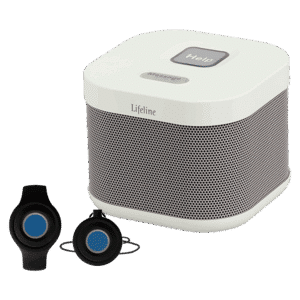
Everything on the stronger evidence list, walks, classes, visits, errands, new places, asks for confidence to keep moving through the world. That is where Lifeline quietly fits: a HomeSafe button at home or On the Go with GPS out in the world means an active life comes with a backstop, and optional fall detection can place a call automatically if a fall is detected. No fall detection technology detects 100 percent of falls, so the button should still be pressed whenever help is needed.
Confidence for the Active Life
Keep doing the things that keep your brain young, with help one press away.
So keep the crossword. Add the walk, the phone call, the hearing check, and the new recipe. The science may still be settling, but the direction it points is generous: the life that protects your brain best is a life worth living anyway.
Frequently Asked Questions
Do brain games prevent dementia?
Not on their own, based on current evidence. Brain training reliably improves the trained task, and some structured cognitive training shows promising findings, but commercial memory games have not been proven to prevent dementia. They work best as one enjoyable strand of a broader brain healthy life.
What actually helps prevent dementia?
The strongest evidence points to a combination: regular physical activity, social connection, treating hearing and vision changes, managing cardiovascular health and sleep with your doctor, and staying mentally engaged with varied, novel activities rather than one repeated game.
What are the best free brain games for seniors?
Crosswords, sudoku, card games like bridge and rummy, chess, dominoes, jigsaw puzzles, and trivia with family. Favor games that involve other people, rotate them for variety, and let difficulty rise gently. Enjoyment is what keeps the habit alive.
Are crossword puzzles good for your brain?
They are good mental engagement and a pleasure worth keeping, and practice will make you better at crosswords specifically. Just pair them with movement, company, and new kinds of learning, which carry stronger evidence for overall brain health.
When should I worry about memory loss?
See a doctor when memory changes affect daily life: repeating questions, getting lost on familiar routes, trouble with bills or medications, or personality changes others notice. Some causes are treatable, and early conversations lead to better support either way.