






Safe footwear for seniors is the fall prevention topic hiding in plain sight. Families secure the rugs, brighten the hallways, and add the grab bars, and then the person they love walks across all of it in backless slippers with soles gone smooth. The shoes are the last item in most safety plans, and they are the first thing to touch the floor.
Quick Answer
The safest shoes for seniors have a non slip sole, a low wide heel, a firm heel counter, a roomy toe box, and a secure closure such as laces or straps. Backless slippers, worn smooth soles, and walking in socks all raise fall risk. Fit matters as much as features, so measure both feet.
The stakes are the familiar ones: according to the CDC, more than one in four adults age 65 and older falls each year, and footwear is one of the few risk factors that can be fixed with a single shopping trip. Here is what to look for, what to retire, and how to get the fit right.
What a Safe Shoe Looks Like
- A non slip, textured sole that grips smooth floors: thin and firm beats thick and spongy
- A low, wide heel, since height and narrowness both work against balance
- A firm heel counter that cups the back of the foot and does not collapse when pressed
- A roomy toe box that lets toes spread without sliding around
- A secure closure: laces, straps, or elastic that hold the foot, never a shoe that grips by being tight
One principle sits under all five: the foot should feel the floor and stay attached to the shoe. Soles that are too soft and thick blur the ground underneath, and shoes that hang loose ask the toes to do the gripping, which quietly changes the way a person walks. If a shuffling or cautious gait has crept in, the shoes are one of the first places to look, and anything new or worsening in the way someone walks is also worth mentioning to the doctor, since gait changes can have treatable causes.
The retirement list
- Backless slippers and flip flops. Nothing holds the heel, so every step is a small act of toe gripping.
- Any sole worn smooth. Flip the shoes over; if the tread is gone, the shoe is done, however comfortable the top half remains.
- Floppy, stretched, or broken down favorites. The most dangerous shoe in the house is usually the most loved one.
- High heels and narrow dress shoes for everyday wear. Save them for the occasion, and make the walk to the car the shortest part of it.
- Long or untied laces. If tying has become hard, switch to elastic laces or straps rather than leaving laces loose.
The most dangerous shoe in the house is usually the most comfortable one: the old favorite with the sole worn smooth.
The house shoe question
Most falls happen at home, and home is exactly where footwear standards collapse: socks on wood floors, bare feet on tile, the ancient slippers by the bed. The fix is not wearing outdoor shoes indoors unless you want to; it is owning one pair of real house shoes, with a back, a grip sole, and a secure fit, that live by the bed and go on before the first step of the day. Nighttime trips to the bathroom deserve the same treatment as the front walk, because in the dark, they are riskier. Pair the house shoes with the nightlights from our room by room fall proofing guide and the nighttime route is covered top to bottom.
Getting the fit right
- Have both feet measured, standing, later in the day when feet are at their largest. Feet change size and shape with age, and the size from a decade ago is a guess, not a fact.
- Fit the larger foot, and bring the socks you actually wear.
- Walk in the shoes on a hard floor before deciding, not just carpet.
- Comfortable now beats broken in later. A safe shoe should feel right in the store.
- If there is foot pain, numbness, diabetes, or a wound that will not heal, make the next stop a podiatrist rather than a shoe store. Fit problems and foot problems need different professionals.
Where shoes fit in the bigger plan
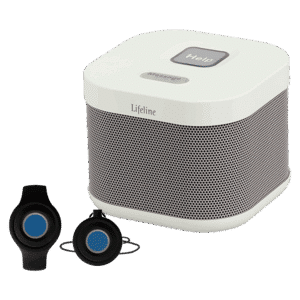
Footwear is one layer of the same plan this series has been building: a fall proofed home, legs kept strong, and honest answers for the day something still goes wrong. That last layer is where Lifeline stands: a HomeSafe button puts help one press away around the clock, and optional fall detection can place the call automatically if a fall is detected. No fall detection technology detects 100 percent of falls, so the button should still be pressed whenever help is needed.
Every Layer Counts
Good shoes lower the risk. A Lifeline button answers whatever risk remains.
Walk to the closet with this list and be ruthless for ten minutes. Retire the smooth soles, promote the pair that holds the heel, and put real house shoes beside the bed. Few safety upgrades cost less, and none is used more often: every step, every day.
Frequently Asked Questions
What kind of shoes should seniors wear to prevent falls?
Shoes with a non slip textured sole, a low wide heel, a firm heel counter, a roomy toe box, and a secure closure such as laces or straps. The foot should feel the floor and stay attached to the shoe, so thin firm soles beat thick spongy ones, and a snug secure fit beats a loose favorite.
Are slippers safe for elderly people?
Backless slippers are one of the riskiest choices in the house, because nothing holds the heel. The safer version is a real house shoe with a back, a grip sole, and a secure fit, kept beside the bed and worn from the first step of the day.
Is it safe for seniors to walk in socks at home?
Socks on smooth floors offer very little grip, and most falls happen at home. House shoes with non slip soles are the better habit; if socks are preferred, choose pairs with grip dots on the sole.
How often should older adults replace their shoes?
When the tread wears smooth, the heel counter softens, or the shoe no longer holds the foot securely, regardless of age or attachment. Flip the shoes over and check the sole; a worn tread means the shoe is done.
Should seniors get their feet measured before buying shoes?
Yes, both feet, standing, later in the day when feet are largest. Feet change size and shape with age, so an old size is a guess. Fit the larger foot, bring the usual socks, and walk on a hard floor before deciding.