






Coming home after a hospital stay is a meaningful milestone — but it can also be one of the most physically demanding stages of recovery. Strength, balance, and confidence often take time to return, and everyday movements that once felt automatic can feel less predictable during those first weeks at home.
Having the right support in place during this transition can make a real difference, both for seniors returning home and for the families helping them get there.
Quick Answer
The weeks following a hospital discharge are one of the highest-risk periods for falls among older adults. Fall detection helps close the gap by automatically alerting for help if a fall occurs and the wearer is unable to press their button — giving seniors and their families greater confidence during the recovery period at home.
Why the Post-Discharge Period Requires Extra Attention
A hospital stay — even a short one — can affect the body in ways that aren’t always obvious at discharge. Reduced activity, bed rest, and the physical toll of illness or treatment can leave older adults feeling less steady on their feet than before. Muscle strength and reaction time don’t always bounce back immediately, and the home environment can feel more challenging to navigate than it did before.
Fall Risk After Discharge
The weeks following a hospital stay are a particularly high-risk period for falls. Research consistently shows that fall risk increases significantly after discharge, with many of those falls resulting in injury. This isn’t because seniors are careless — it’s because the body needs time to regain the strength and coordination that hospital stays can temporarily diminish.
Medication Changes
New prescriptions or adjusted dosages are common after a hospital stay, and some medications can affect balance, blood pressure, or alertness. Combined with reduced physical confidence during early recovery, these changes can make even familiar movements feel less certain.
How Fall Detection Helps During Recovery
Fall detection technology is designed to recognize when a fall has occurred and alert for help automatically — even if the person who fell is unable to press a button. During recovery, when strength and balance may still be rebuilding, this automatic response can be especially important.
Faster Access to Help
When a fall happens during recovery, getting help quickly matters. Even a fall that doesn’t cause serious injury can be disorienting and difficult to recover from alone. Knowing that help is on the way — without needing to reach a phone or press a button — allows seniors to feel more confident moving around the home during those early weeks.
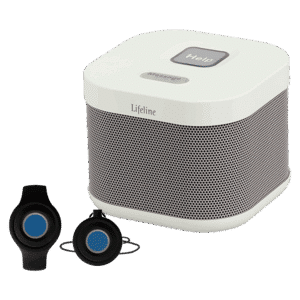
Lifeline’s HomeSafe system offers in-home fall detection that automatically contacts Lifeline’s Response Center if a fall is detected. A Trained Care Specialist is available every hour of every day to assess the situation and send the appropriate help, whether that is emergency services, a family member, or a neighbor.
For seniors who are resuming activity outside the home as they recover, Lifeline’s On the Go provides fall detection and two-way communication from anywhere with cellular coverage. Whether a senior is running errands, attending a follow-up appointment, or taking a walk around the neighborhood, On the Go ensures help is available wherever recovery takes them.
More Than Just Fall Detection
Not every difficult moment during recovery involves a fall. Dizziness, sudden weakness, pain, or simply feeling uncertain after a near-miss are all situations where being able to reach help quickly matters.
Lifeline systems combine fall detection with a wearable help button, so seniors can call for assistance whenever something doesn’t feel right — not only when a fall has already happened. This flexibility makes the system useful across a wide range of recovery situations, not just the most serious ones.
For health questions that arise during recovery — a new symptom, a medication concern, uncertainty after a difficult night — CareCompass™ connects Lifeline subscribers to a registered nurse around the clock using the same help button they already wear. Recovery doesn’t always raise 911-level concerns, and CareCompass™ is there for the moments that fall in between.
Supporting Caregivers Through the Transition
The post-discharge period can be just as stressful for family members as it is for the person recovering. Caregivers often worry about falls, medication adjustments, and whether their loved one will ask for help when they need it — especially when distance or other responsibilities make it hard to be there in person.
A Lifeline system helps ease that worry by giving seniors a reliable, independent way to reach help. Fall detection adds reassurance that support can be summoned even in situations where pressing a button isn’t possible.
As recovery progresses and confidence returns, caregivers can gradually step back knowing that a safety layer remains in place. That balance — independence for the senior, reassurance for the family — is often what makes the difference between a smooth transition and a stressful one.
Making the Transition Home Feel More Manageable
Recovery takes time, and the transition from hospital to home is rarely linear. Fall detection, paired with the ability to call for help at the press of a button, helps create an environment where seniors can focus on healing without the constant worry of what happens if something goes wrong.
For families thinking about safety planning after a hospital discharge, a Lifeline system is a straightforward place to start. It requires no complicated setup, works from the moment it arrives, and adapts to wherever recovery takes your loved one — at home or on the go.