







Quick Answer
South Korea uses AI to make daily check-in calls to seniors living alone, catching emergencies early and easing isolation. The lesson for families is straightforward: consistent check-ins and fast access to help matter. In the U.S., a Lifeline medical alert system delivers that same coverage — backed by real, trained specialists rather than automated technology.
One morning in late 2024, a 77-year-old woman outside Seoul woke up in severe pain and could barely speak. When her phone rang, she managed only a few words before hanging up. The caller was not a family member or a nurse. It was an A.I. chatbot nicknamed Talking Buddy, and it noticed something was wrong. It alerted a social worker, and within hours she was in surgery. She later told The New York Times, “They said A.I. saved me.”
It is a striking story. But the part worth paying attention to is not the technology. It is what the technology made possible. Someone was checking in, something caught the problem early, and help arrived fast. That is the same principle that protects millions of older adults in the United States every day.
What Is South Korea Doing With A.I. and Seniors?
South Korea is aging faster than any country in the world. In about 15 years, the share of people over 65 has doubled to more than a fifth of the population, and there are not enough doctors, social workers, or family caregivers to keep up. To help fill the gap, cities across the country use tools like Talking Buddy, which holds short two to five minute conversations to ease loneliness, encourage healthy habits, and flag possible emergencies. Another program, called SuperBrain, gives people with early memory changes guided exercises designed to slow cognitive decline.
Two details matter most. First, every A.I. conversation is reviewed by human social workers, because the technology can misread a situation or even invent things it should not promise. Second, the goal is early detection. Catching a problem sooner, whether it is a fall, a missed medication, or a change in thinking, gives families more time and better options. You can read the full New York Times report here.
Why This Matters for Families in the U.S.
The same demographic shift is happening here. The U.S. Census Bureau reports that adults 65 and older now make up about 18 percent of the population, and in 11 states they already outnumber children. Within the next decade, older adults are projected to outnumber children nationwide for the first time in U.S. history.
The everyday risks rise with that shift:
- Falls are the leading cause of injury for adults 65 and older, and about one in four older adults reports a fall each year. (CDC)
- More than 7 million Americans are living with Alzheimer’s, and nearly 13 million family members and friends provide their care. (Alzheimer’s Association)
- About one in five adults over 50 lives alone, which raises the risk of isolation and the health problems that come with it.
None of this is meant to frighten anyone. It is meant to make one point clearly. Most older adults want to stay in their own homes, and with the right support, they can.
The Real Lesson: Someone Needs to Be Paying Attention
In Korea, one 81-year-old man marks his weekly A.I. call on his calendar and look forward to it. He told reporters the bot checks in more faithfully than his own children manage to. That is a little heartbreaking and very human. What he values is not the software. It is the feeling of not being forgotten, and the reassurance that if something went wrong, someone would know.
That is exactly what a medical alert system provides, with one important difference. When it matters most, you reach a real person.
How Lifeline Supports Your Family
Medical Alert Systems
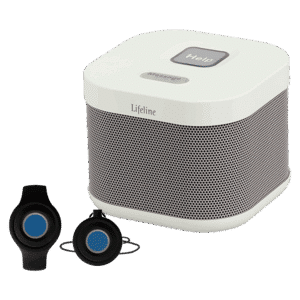
A medical alert system is a wearable device that connects the person wearing it to a response center at the press of a button, so help is available in seconds during an emergency. With Lifeline, that button connects to a trained response specialist at a U.S.-based response center, 24 hours a day. No chatbot, no waiting, no guessing.
Depending on what your family needs, that protection can travel with your loved one or stay close to home:
- For active days outside the house, the On the Go mobile system adds GPS so help can find them wherever they are.
- Fall detection can automatically place a call for help if a fall is detected, even when your loved one cannot press the button themselves.
- For someone who is mostly home, the HomeSafe in-home system offers dependable coverage with two-way voice.
- If they prefer something that looks like everyday tech, the medical alert smartwatch combines help at the press of a button with familiar features.
Not sure where to start? Our guide to choosing a medical alert system walks through the questions families ask most.
When It Is Not a 911 Emergency
Not every worry is a 911 emergency. Sometimes a new symptom shows up after hours, or a loved one just does not seem like themselves. For moments like that, CareCompass™, a Lifeline add-on, connects Lifeline subscribers to a registered nurse, day or night, using the same help button they already wear. The nurse assesses what is going on, talks it through, and helps decide the right next step, whether that is safe self-care at home, a call to the doctor, or getting emergency help on the way when it is needed. It is reassurance for the small moments that do not feel small when they are happening to someone you love.
What About Ongoing Health Monitoring?
You may have read about programs that track blood pressure, weight, or other vitals at home so a care team can spot problems early. These remote monitoring programs are set up and managed by a person’s doctor or health provider, not something a family signs up for on their own. If continuous monitoring sounds like it could help your loved one, the best first step is to ask their doctor whether it is right for them. In the meantime, a Lifeline system gives your family dependable, always-on protection you can put in place today.
Frequently Asked Questions
Is a Medical Alert System the Same as an A.I. Chatbot?
No. A medical alert system connects the person wearing it to a real, trained response specialist at a response center. The A.I. tools used in Korea make automated check-in calls, but even there, every conversation is reviewed by human staff. Lifeline leads with people, not automation.
How Is a Medical Alert System Different From a Daily Check-In Call?
A daily check-in call happens at a scheduled time. A medical alert system is always on. If something goes wrong at any hour, the wearer can reach help with the press of a button. With automatic fall detection, help can be on the way even when pressing a button is not possible.
Can a Medical Alert Help Someone With Early Memory Loss?
Yes. For someone with mild memory changes, features like GPS and automatic fall detection add a layer of coverage, while families gain peace of mind. It is not a treatment for dementia, but it helps keep a loved one safer while living independently.
Can Lifeline Help With Non-Emergency Health Concerns?
Yes, not every worry is a 911 emergency. Sometimes a new symptom shows up after hours, or a loved one seems off. For moments like that, CareCompass™ connects Lifeline subscribers to a registered nurse, day or night, using the same help button they already wear. The nurse assesses what is going on, talks it through, and helps decide the right next step, whether that is safe self-care at home, a call to the doctor, or getting emergency help on the way when it is needed. It is reassurance for the health concerns that do not feel small when they are happening to someone you love.
The Bottom Line
The story out of Korea is a glimpse of where care is heading. More connected, more attentive, and more focused on catching problems early. Technology will keep changing. What does not change is the thing that actually keeps people safe, knowing that someone is paying attention and that help is one press away.
If you have been thinking about protection for someone you love, that is reason enough to look into it now.